Shashwat Sharma Steps Into the Biggest Handover in Indian Telecom
Bharti Airtel's new CEO takes charge of the market leader from a mentor who ran it for thirteen years — with a listing, a rights issue and a London IPO already on his desk
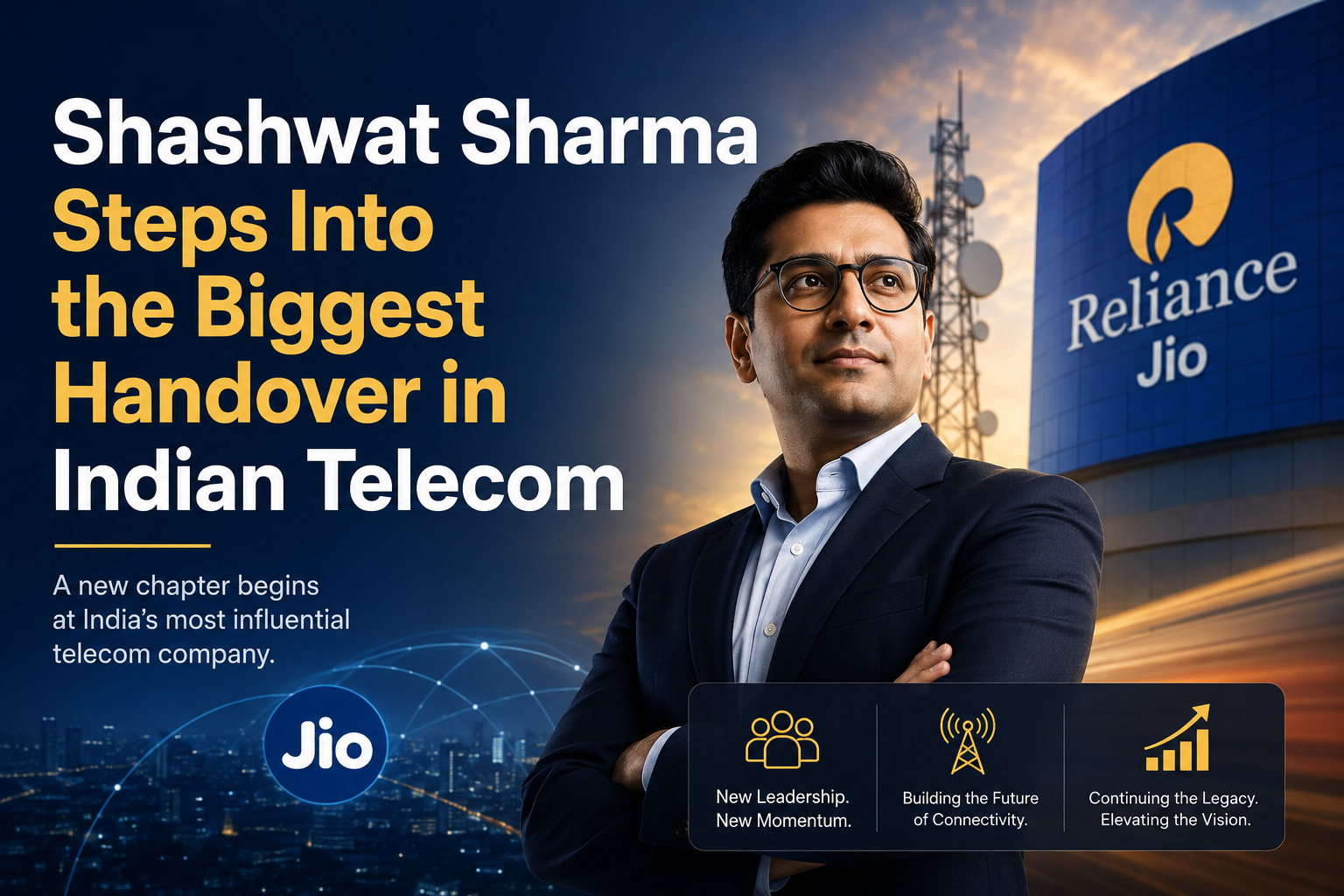
On January 1, 2026, Shashwat Sharma became Managing Director and CEO of Bharti Airtel India, taking over one of the clearest market-leadership positions in Indian corporate life from Gopal Vittal, who had run the company for thirteen years. It is a rare kind of succession in Indian telecom: not a crisis-driven change, but the final step of a transition that had been planned and publicly signalled more than a year in advance.
A Handover Built for Continuity, Not Disruption
Sharma didn't arrive as an outsider. Before taking the CEO role, he spent roughly a year as CEO designate, working directly alongside Vittal across the business to prepare for the transition. Vittal, rather than exiting the company, moved up into the newly created role of Executive Vice Chairman, a five-year mandate under which he now oversees group strategy, digital and technology direction, network strategy, procurement and talent across Bharti Airtel and its subsidiaries — with Sharma reporting into that structure as he runs the core India consumer business. The board also used the moment to refresh the finance function, appointing Soumen Ray as group CFO alongside the CEO transition.
What Sharma Inherits
Sharma takes charge of a company currently performing strongly by most operating measures. Bharti Airtel's most recent quarterly results showed revenue climbing to roughly ₹58,500 crore with an EBITDA margin around 51 percent, alongside a sharp profit jump driven by higher mobile tariffs and continued subscriber growth. That gives Sharma a genuinely enviable starting position compared to many new CEOs — but it also means the market's expectations for continued execution, not a turnaround story, are already set.
The Bets Already in Motion
Several major strategic moves were already underway as Sharma took over, and now sit squarely in his charge. The board had approved a large rights issue, with proceeds primarily earmarked to prepay or reduce the company's borrowings — a balance-sheet move that will shape how much flexibility Airtel has for future spending. Under Vittal's continued oversight, Airtel Money, the company's fintech arm, has also been preparing for a London listing later in 2026, a move that would mark one of the more unusual cross-border listings by an Indian telecom subsidiary in recent years.
Why It Matters for Market Leaders
Sharma's appointment is a useful study in how an incumbent market leader manages a founder-adjacent leadership transition without losing momentum: a long runway of shared work with his predecessor, a structure that keeps institutional knowledge inside the company rather than sending it out the door, and a set of strategic initiatives — the rights issue, the London listing, continued tariff-led growth — that were already moving before he took the seat. For a company defending the top spot in one of India's most capital-intensive, competitive industries, the real test of Sharma's tenure won't be the quarter he inherited. It will be whether Airtel's current growth rate holds once the results are fully his own.
CEO Profiles
At www.elevatexstudios.com / ElevateX Studios, CEO Profiles, part of our Market Leaders coverage, looks at the executives currently running India's dominant companies — how they got the job, what they inherited, and what they're being judged on next.
